
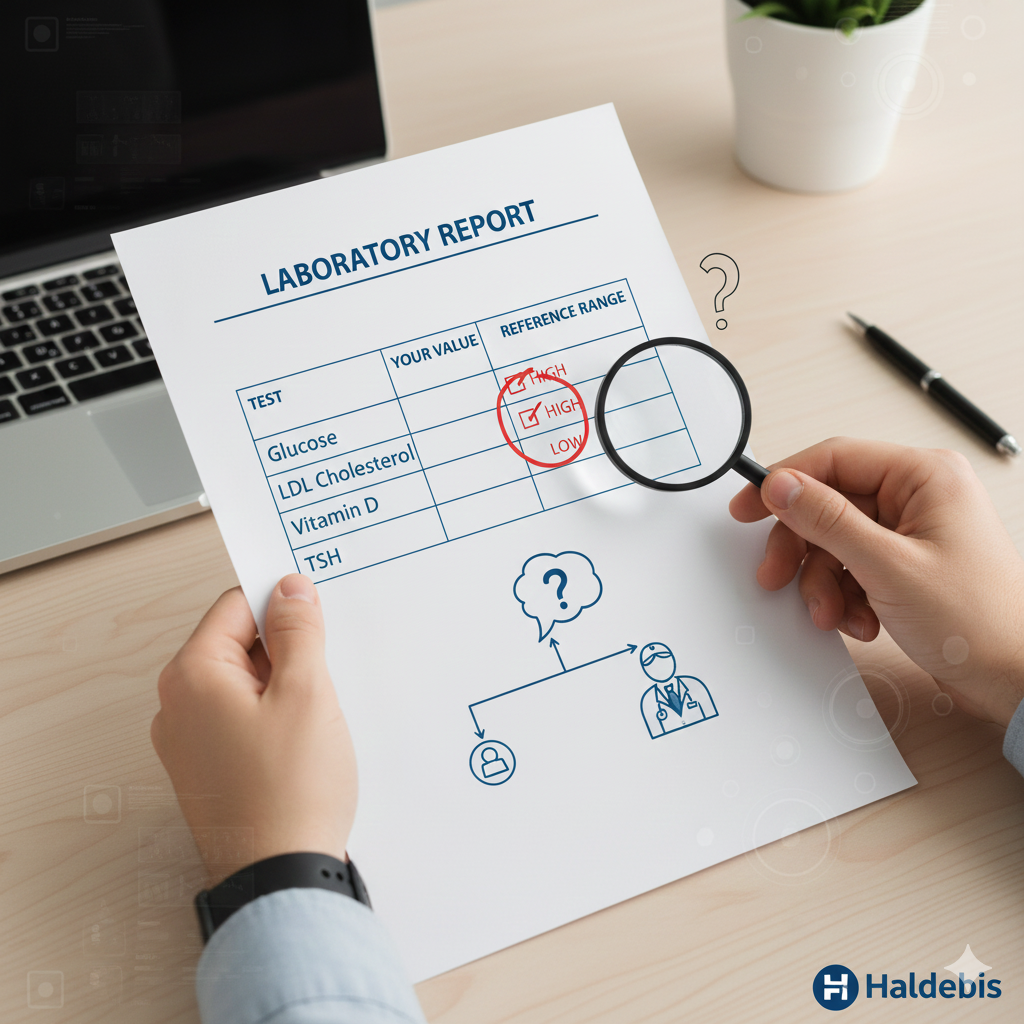
Hey health advocates! Getting a stack of lab results can sometimes feel like receiving a secret code. You see numbers, reference ranges, and acronyms (CMP, LDL, TSH!), and it’s easy to feel overwhelmed. While your doctor is always the best person to diagnose and create a treatment plan, knowing how to interpret the basic structure of your results is incredibly empowering!
Here’s a quick guide on how to start reading those results yourself:
1. The Three Key Columns
Every lab report generally follows the same format:
- Your Result (The “Value”): This is the specific number measured in your blood (e.g., 95 mg/dL). This is your personal data point.
- Reference Range (The “Normal”): This shows the typical range of values expected for a healthy population. For example, it might say (65-99 mg/dL).
- Flag/Annotation: This is the most important part! If your result is outside the reference range, the lab will often flag it with an asterisk (*), an ‘H’ (High), or an ‘L’ (Low).
2. Focus on the “Flags” (But Don’t Panic!)
When reviewing your results, scan straight to the right side of the page to find those flags. If your result is flagged ‘H’ or ‘L’, it means it falls outside the statistically average range.
Here’s the crucial part: A flag does NOT automatically mean you have a disease!
- Sometimes values are slightly high or low due to temporary factors like recent meals, dehydration, stress, or even the time of day the sample was taken.
- The reference range is a broad average. Your doctor knows what’s “normal” for you based on your age, gender, medical history, and overall clinical picture.
3. Understand the “Why” (Common Examples)
Try to understand the purpose of the common tests:
- High LDL: Usually flagged as “bad” cholesterol, suggesting a need for dietary/lifestyle changes.
- Low Vitamin D: Very common, often suggests a supplement is needed to boost bone health and immunity.
- High Glucose (HbA1c): Can indicate issues with blood sugar control.
The Golden Rule: Use this interpretation to formulate smart questions for your physician! Instead of just saying, “My tests are bad,” you can say, “My TSH is flagged as ‘High’; what does that suggest about my thyroid function, and what steps should we take?”
Being proactive and informed is the best way to partner with your doctor on your health journey!
This guide is so informative! Understanding lab results can truly empower us about our health. By the way, if you’re looking to manage health-related products for your practice or clients, check out Suplery. They offer easy inventory tracking and help buy professional supplies directly from suppliers, often with free delivery!
That’s fantastic information! Thank you so much for sharing the details about Suplery—that sounds like a truly valuable service for health practitioners! Easy inventory tracking and streamlining supply purchases aligns perfectly with our mission at Haldebis to simplify healthcare logistics. It’s great to know there are innovative solutions out there helping businesses like ours run smoothly! We appreciate the tip!