
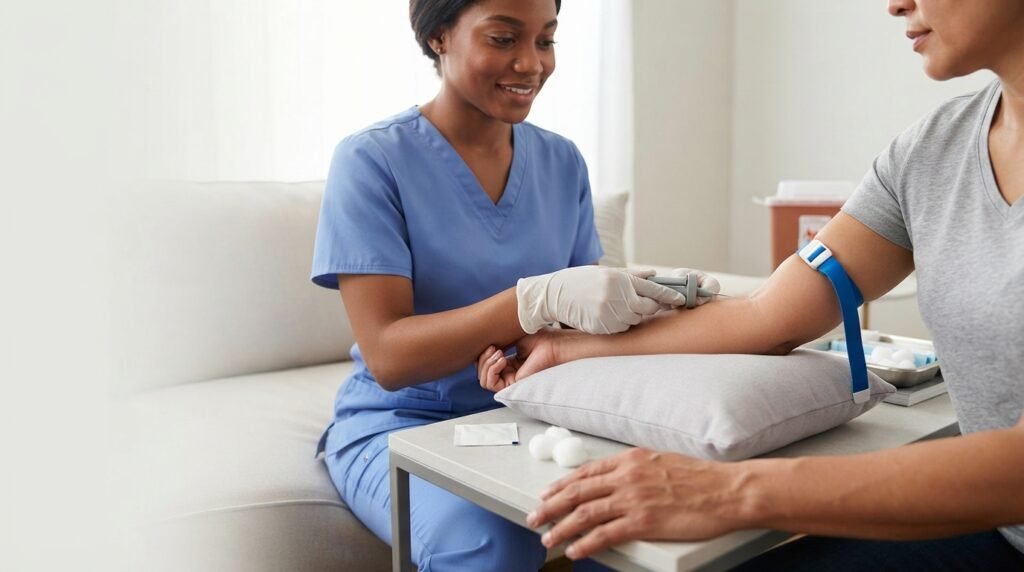
Have you ever wondered why a phlebotomist usually takes blood from your arm—and sometimes from the back of your hand?
The simple answer is veins.
When blood is collected for laboratory testing, a phlebotomist generally looks for a vein that is visible or easy to feel, relatively straight, and suitable for safely collecting the required sample. The area inside the elbow, known as the antecubital fossa, is commonly preferred because it contains several veins that are relatively large and close to the skin. The median cubital vein is often the first choice.
Why the inner elbow?
The veins in this area can provide good blood flow and are generally easier to access. The median cubital vein is also positioned in a way that makes it a common choice for venipuncture.
However, not everyone’s veins are equally visible or accessible. Factors such as age, hydration, previous blood draws, certain medical conditions, and individual anatomy can affect which vein is suitable.
Why the back of the hand?
Sometimes the veins around the elbow or forearm are not suitable or cannot be easily located. In such situations, a phlebotomist may consider the dorsal veins on the back of the hand. Hand veins are recognized as an alternative site for venous blood sampling, although the antecubital area is generally preferred when an appropriate vein is available.
Does the location affect the blood test?
The goal is to collect an appropriate specimen safely while minimizing discomfort and avoiding complications. Proper site selection, skin disinfection, equipment, and collection technique all contribute to the quality of the blood sample.
So, the next time you see a phlebotomist looking at your arm or hand before taking your blood, they’re not choosing a spot randomly. They’re assessing your veins and selecting an appropriate site for safe and effective blood collection.
Need convenient blood collection at home?
Haldebis Mobile Phlebotomy brings professional blood collection services to patients in Maryland, Washington, D.C., and Virginia.
Care that comes to you.